Notes in Anger
May 2021

I
I am not sure why I am writing this. I haven’t been able to write without effort for months now (sorry about the silence, by the way.) But I suppose, as hollow as they can be sometimes, words are also a compass for me. They have always been a way of making sense, of holding on somehow.
Poets, I have often told students, are in the business of creating hope. Their words offer us a balm when we most desperately need it. But there’s something else, perhaps less dazzling, that these same words can do. They give us permission to grieve together, and together rage. So while we circulate poems on Instagram to remind us that silver linings do appear, it’s not hope that I want to share now, but fury. There’s this poem by the Greek poet C P Cavafy that cuts to the chase:
Finished
Deep in fear and in suspicions,
with troubled mind and frightened eyes,
we sweat away and scheme at what to do
in order to avoid the certain
danger that so frightfully threatens us.
And yet we err—that danger is not in our path;
false were the portents
(either we didn’t hear them, or didn’t fully understand them).
A different disaster, which we never imagined,
unexpected, rapidly falls upon us,
and unprepared—no time left—we’re swept away.
II
Surely, we imagined this disaster. Some of us, most of my friends certainly, want to believe we saw the signs. That when this government was voted into power it could only mean horror upon horror. But there was a cushion, a fat cushion of privilege, that kept us from experiencing the full weight of the calamity. All of this is obvious. And yet, here we are now. We are being swept away. And for every day we remain, we feel a hard-to-admit gnawing—the guilt of, for no apparent reason, having survived.
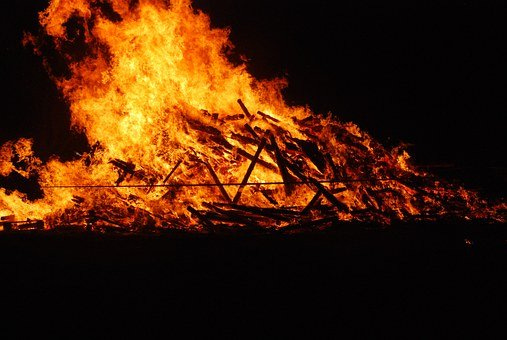
It’s not just a virus we are surviving, though. Not just outright murderous governance. We’re also surviving a culture of lies that has been for years in the making. There is no oxygen shortage, the government says, the pyres aren’t burning. And an aunt, related only by Whatsapp, believes it. A few hundred forwards later, enough people believe we should be grateful even as we gasp for air. No one, not even her children, tell the aunt she is lying. Even if they did, would she believe it?
III
On paper, the truth is an irrefutable idea we must accept whether we like it or not. And yet, as we live through these death days, an army of people sends propaganda into the ether and works so very hard to tell a whole country it is just being dramatic. The truth, they believe, can be managed. And with time and money, they might even succeed. I fear too many of us will forget the rage we feel in this moment now, or like Whatsapp aunty, will just make excuses.
When scrolling through the purgatory that is Twitter recently, I saw it happen. A lawyer apparently told a judge that this apocalypse wasn’t the government’s fault, but was a failure of the “system.” When we get through this, I am sure, too many of us will still be doing such fancy footwork, collectively gaslighting our way back to the status quo. Maybe our real task is not to find reason in the days to come, but instead to hold on to emotion.
IV
My father whom I do not see often sent me a picture the other day. It is a black-pen drawing of a man, legibly enraged. Upon the man’s head is a turban—inside it, bodies stacked upon each other, the weight of their lives upon the man’s head.
When I was a child, my father loved to tell me stories of injustice, which were watered down synopses of Hindi novellas, mostly. But even in the darkness of those stories there was always a suggestion of what else our world could be: The old lady ill-treated by her son found an ally in his child. A funeral, condoned by the police, ended in a song. I asked my father where that old hope was in his drawing. He thought for a moment and said simply, “The man is angry.” Holding up each body, the man will stay like that.
If you would like to contribute towards Covid-19-related causes, this Mutual Aid India document is an excellent place to start. There are fundraisers from around the country, many of which support marginalised communities outside metropolises. If you would like to contribute from overseas, use the document to find a campaign that is open to foreign donations (these are clearly marked). Stay safe, everyone.